
Effective warehouse security for small business focuses on layering high-definition surveillance cameras with smart access controls and perimeter reinforcements like motion lighting. Owners can secure their inventory by installing remote-monitored alarm systems and using industrial cages for high-value items; these methods provide constant protection without the need for on-site personnel. This approach ensures comprehensive facility oversight while minimizing the overhead costs associated with professional guard services.
For a growing Utah business, every pallet of inventory represents significant capital and the future of your operations. A single theft or a recurring discrepancy in your stock count can derail your monthly growth and erode the slim margins that small businesses work so hard to maintain. While large corporations can afford twenty four hour guard services, smaller operations often feel forced to choose between excessive overhead and leaving their assets vulnerable. Security for your warehouse should not be a luxury reserved for the Fortune 500; it is a fundamental requirement of smart management. This guide explores how to secure your facility using high impact physical upgrades, affordable DIY surveillance, and smarter internal organization. You will learn to manage access control effectively and discover how third party warehousing provides professional grade protection. We have also included a practical checklist to ensure your business remains secure without breaking your budget.
The Real Cost of Inventory Loss for Utah Small Businesses
For a local manufacturer in Sanpete County, every piece of inventory represents cash flow that has already been spent. Inventory shrinkage, whether from external theft or internal mismanagement, does more than just lower your stock levels; it erodes the thin margins that keep a small operation profitable. While large corporations can justify the expense of 24/7 security teams, most local businesses require more practical, cost effective warehousing and storage solutions.
True warehouse security for small business starts with a shift in perspective. It is less about high tech gadgets and more about maintaining total control over your physical space. Many articles focus solely on buying cameras, but for a lean operation, a preventative layout is often more effective. A disorganized floor creates blind spots and opportunities for items to go missing without immediate notice. By implementing organized inventory handling, you eliminate the chaos that masks loss.
Security is ultimately about visibility. When your floor is clean and every item has a specific home, a missing box becomes an immediate red flag rather than a mystery to solve during next month's audit. Utilizing dependable warehousing in Ephraim allows you to focus on growth, knowing that your security is built into the workflow rather than just bolted onto the door.
Reinforce the Physical Perimeter: High Impact, Low Cost Upgrades
Securing a perimeter does not require a five-figure budget. It requires identifying the most vulnerable entry points and applying industrial-grade hardware found at any local supplier. For standard personnel doors, a heavy-duty Grade 1 deadbolt is far superior to a standard knob lock. When considering how to lock warehouse door entries effectively, focus on the strike plate. Most standard plates are held by short screws that pull out easily under pressure. Replacing these with three-inch hardened steel screws ensures the lock is anchored into the wall studs rather than just the thin door frame.
On overhead or rolling doors, avoid basic padlocks with exposed shackles. Instead, use a puck lock or a shrouded shackle padlock. These designs make it nearly impossible for bolt cutters to get a grip on the steel. These are simple hardware store solutions that provide immediate physical resistance without the need for complex software or enterprise-level subscriptions.
Lighting serves as a passive security officer. High-intensity LED exterior fixtures are a more reliable investment than a part-time night guard for a small facility. LEDs with a high lumen output and a daylight color temperature eliminate the shadows where theft often begins. They are inexpensive to operate and provide the clear visibility necessary for organized inventory handling during early morning or late evening shifts. By hardening the physical shell of your warehousing and storage solutions, you create a hard target that discourages opportunistic theft before it ever reaches your inventory. This baseline of physical protection is the first step in establishing dependable warehousing in Ephraim for your local business.
Smart Technology for Lean Budgets: DIY Surveillance and Sensors
While physical locks provide the first layer of defense, electronic oversight adds the necessary visibility for times you are not onsite. Small business owners often ask: How much does a security system cost for a small business? For a lean operation in Ephraim, a professional enterprise system can easily exceed $5,000 for installation plus high monthly contracts. However, DIY warehouse security camera systems have changed the landscape. A comprehensive setup using high quality consumer grade hardware often ranges from $400 to $1,200, with optional cloud storage fees as low as $10 per month.
Feature | DIY Systems | Professional Monitoring |
|---|---|---|
Upfront Cost | $400 - $1,200 | $2,000 - $10,000+ |
Monthly Fee | $0 - $30 | $50 - $200+ |
Installation | Self-installed | Professional technician |
Alerts | Direct to Smartphone | Dispatch Center |
Modern sensors are highly sensitive and require very little power. Door and window sensors, combined with motion detectors, provide real time entry alerts that go straight to your smartphone. For a local manufacturer, this means the difference between discovering a break-in on Monday morning and receiving a notification the moment a door is forced open on a Saturday night.
The primary value of these warehouse security camera systems is remote viewing. An owner in Ephraim can check their inventory levels or verify a late night delivery from home without needing a 24/7 onsite presence. This visibility supports organized inventory handling because it allows you to spot misplaced pallets or unauthorized movement in real time. Implementing these smart tools creates a more dependable warehousing in Ephraim experience, giving you the benefit of constant surveillance without the overhead of a security firm. By layering these digital alerts over your physical hardware, you establish a comprehensive approach to warehousing and storage solutions that scales with your business.
Internal Organization as a Security Strategy

Disorganization functions as a smokescreen for both accidental loss and intentional theft. In a cluttered environment, a missing item is often dismissed as being misplaced rather than stolen. This delay in recognition is one of the greatest hurdles to effective warehouse theft prevention. By the time a business owner realizes a high value component is truly gone, the window for recovery has usually closed. A clean floor and structured aisles ensure that every item remains visible and accounted for at all times.
High value assets, such as specialized electronics or precision tools, require a secondary layer of containment within the facility. A warehouse security cage, which is a floor to ceiling wire mesh enclosure, creates a secure zone for your most expensive products. This allows for organized inventory handling where only a limited number of employees have access to the specific keys or codes for that area. Limiting the number of people who can touch high value stock naturally reduces the risk of internal shrinkage.
Structured workflows are the foundation of dependable warehousing in Ephraim. When every storage rack is strictly labeled and every pallet has a designated home, the visual profile of the warehouse stays consistent. If a slot is empty but the inventory log indicates it should be full, the discrepancy is immediately obvious to anyone walking the floor. At Sanpete Warehouse, we maintain these clean layouts because they force accountability into the daily routine. These warehousing and storage solutions transform the physical space into a self auditing system. By maintaining a place for everything, you remove the ambiguity that allows theft to go unnoticed.
Access Control: Managing Movement Without a Doorman
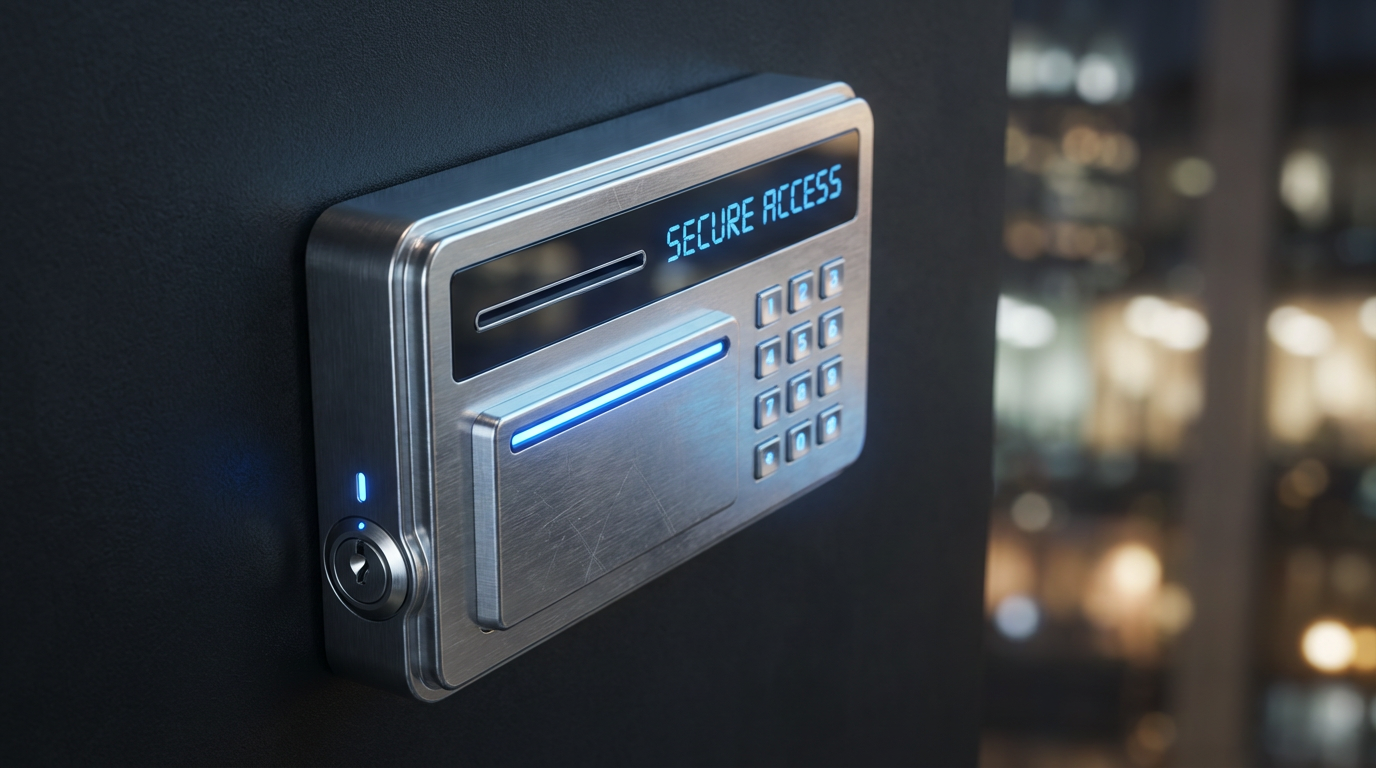
Effective access management answers the fundamental question of how is security provided in a warehouse without a full time guard. The most common vulnerability for a small facility is the traditional brass key. Keys are easily copied at any hardware store and provide no data on who entered the building or when. Managing these access points is a critical element of warehouse security for small business. A more secure, low cost alternative is a digital keypad system that allows for unique codes for different staff members. If a keypad is not feasible, a manual key sign out log is an essential requirement. This ensures that every individual holding a key is personally accountable for the facility’s contents.
Securing the door is only half the battle. You must also identify how people move through the space once they are inside. A common cause of inventory shrinkage is delivery theft, which occurs when outside drivers or visitors wander into storage zones while waiting for a shipment. By physically separating the receiving area from the main inventory floor with a counter or designated staging lanes, you restrict unauthorized movement. This layout is a core component of professional warehousing and storage solutions. Maintaining these boundaries supports organized inventory handling and ensures that guests remain in supervised zones. Implementing these movement controls creates a foundation for dependable warehousing in Ephraim that functions efficiently without constant oversight.
The Security Benefits of Third Party Warehousing

Using a professional third party facility acts as a strategic shortcut for warehouse security for small business. Instead of funding the capital improvements for a private garage or struggling with the limited protection of a generic storage unit, a business owner inherits a pre-built security ecosystem. Choosing dependable warehousing in Ephraim allows you to bypass the costs of installing industrial grade lighting and reinforced entry points while gaining the benefit of a professional layout.
The most significant advantage is the presence of active oversight. A facility manager like Jason Goble provides a level of accountability that cameras and locks alone cannot provide. Unlike an unmonitored storage locker where inventory can sit for weeks without being checked, a professional space utilizes organized inventory handling as a standard practice. Structured workflows and clean concrete floors ensure that every pallet is visible; this discipline eliminates the blind spots where shrinkage typically occurs.
Security Layer | Private Garage or Self-Storage | Sanpete Warehouse (3PL) |
|---|---|---|
Monitoring | Unmonitored or basic gate logs | Active facility manager oversight |
Organization | Prone to clutter and blind spots | Structured aisles and clean floors |
Handling | Ad-hoc or DIY movement | Managed receiving and storage |
These warehousing and storage solutions remove the security burden from the business owner. By integrating your inventory into a managed environment, you replace DIY guesswork with a disciplined system designed for total inventory control and transparency.
Warehouse Security Checklist for Small Business Owners
Establishing a secure facility relies on consistent, low cost habits rather than expensive hardware. This warehouse security checklist for small business owners serves as a roadmap for maintaining the integrity of your warehousing and storage solutions.
Perimeter Check: Verify all exterior doors seat firmly in their frames; check that skylights and low level windows are barred or reinforced with security film.
Lighting Audit: Replace burnt out LEDs immediately and ensure exterior beams illuminate the full parking area without leaving deep shadows near entry points.
Inventory Audit Frequency: Conduct cycle counts of high value items weekly to ensure organized inventory handling remains accurate between full audits.
Access Log Review: Review digital keypad timestamps or manual key logs weekly to identify any unexpected after hours entries.
Blind Spot Identification: Walk the floor to ensure rack placements have not blocked camera views; install convex mirrors at aisle intersections to increase visibility.
These practices form a comprehensive approach to warehouse security for small business. Following these steps helps maintain dependable warehousing in Ephraim by identifying vulnerabilities before they result in loss.
Protecting your inventory is about layers. By focusing on perimeter lighting, smart locks, and internal inventory tracking, you can create a secure environment without the expense of a physical guard service. However, maintaining these systems while scaling your business is a significant commitment. If you want expert help managing your logistics and security in a professional facility, we are here to support you. You can learn more about our team and our approach to safety today.