
Effective warehouse cleaning and organization requires implementing a strict daily schedule that includes clean as you go policies to prevent clutter accumulation. Businesses should also utilize inventory ABC analysis to optimize slotting; clear labeling and routine safety audits further ensure the facility remains efficient and safe for all operations.
A cluttered floor and mislabeled racks do more than just slow down your team; they actively erode your bottom line through lost time and avoidable safety hazards. When your storage space reaches a point where finding a single pallet feels like a search mission, your ability to scale operations becomes compromised. Efficient warehouse management is not a luxury; it is a strategic necessity for small businesses aiming for sustainable growth. In this guide, we will explore practical strategies to regain control of your facility. We will break down the implementation of the 5S method, share actionable ideas to maximize your existing floor space, and provide a comprehensive housekeeping checklist. You will learn how a clean as you go policy and professional warehousing solutions can transform your storage area from a bottleneck into a high performance engine for your business.
Why Warehouse Cleaning and Organization Matters for Growth
For a growing manufacturer in Sanpete County, the transition from a home garage or a cramped backyard shop to a dedicated facility is a significant milestone. However, this growth often brings a hidden burden: the operational drag of disorganization. In a cluttered environment, small inefficiencies quickly compound into substantial financial leaks. A misplaced pallet or a disorganized shelf does more than look messy; it creates lost labor hours as employees hunt for stock, leading to shipping errors that damage customer trust.
A professionally managed warehouse environment differs from a typical self-storage unit by prioritizing flow and accessibility. Effective warehouse cleaning and organization are not just about aesthetics; they are fundamental to maintaining control over inventory. When aisles are clear and items are correctly slotted, the hidden costs of operation decrease. Sanpete County businesses scaling their production need warehousing and storage solutions that allow them to focus on their craft rather than managing chaos. By utilizing flexible storage layout options, a business can ensure that as their product line expands, their footprint remains efficient and their fulfillment times stay consistent. This structured approach provides the necessary stability for a local brand to move from a small-scale operation to a regional provider without losing profit to preventable overhead.
Implementing the 5S Method in Your Storage Space

Managing operational overhead starts with a proven framework like the 5S methodology. Originally developed for lean manufacturing, these five principles provide a roadmap for maintaining professional grade warehouse cleaning and organization in any size facility. By applying these steps, local businesses can transition from reactive cleaning to a proactive system that protects inventory and equipment.
Sort (Seiri): Begin by clearing out anything that does not belong in the active work area. For a small manufacturer, this means identifying dead stock that hasn't moved in six months. These items should be moved to long term storage or liquidated to reclaim valuable floor space for high velocity products.
Set in Order (Seiton): Once the clutter is removed, arrange the remaining items so they are easy to access. This involves creating a logical flow where the most frequently used tools and materials are closest to the workstations. This reduces wasted motion and employee fatigue.
Shine (Seiso): Regular cleaning is also a form of inspection. Daily floor sweeping is essential because it prevents dust buildup on sensitive inventory and reduces forklift tire wear. A clean floor allows operators to spot leaks or equipment issues before they become expensive repairs.
Standardize (Seiketsu): Create clear protocols for the first three steps. This could be as simple as a laminated daily checklist for each aisle. When every team member follows the same warehousing and storage solutions protocols, the facility remains orderly without constant managerial intervention.
Sustain (Shitsuke): The final step requires the discipline to maintain the standard. Regular audits ensure that flexible storage layout options are being used correctly and that old habits do not creep back in.
Establishing these habits ensures that your facility supports growth rather than hindering it. If your current space makes these steps difficult to manage, you can contact Sanpete Warehouse to see how our structured environment can simplify your inventory management.
Smart Warehouse Organization Ideas to Maximize Floor Space
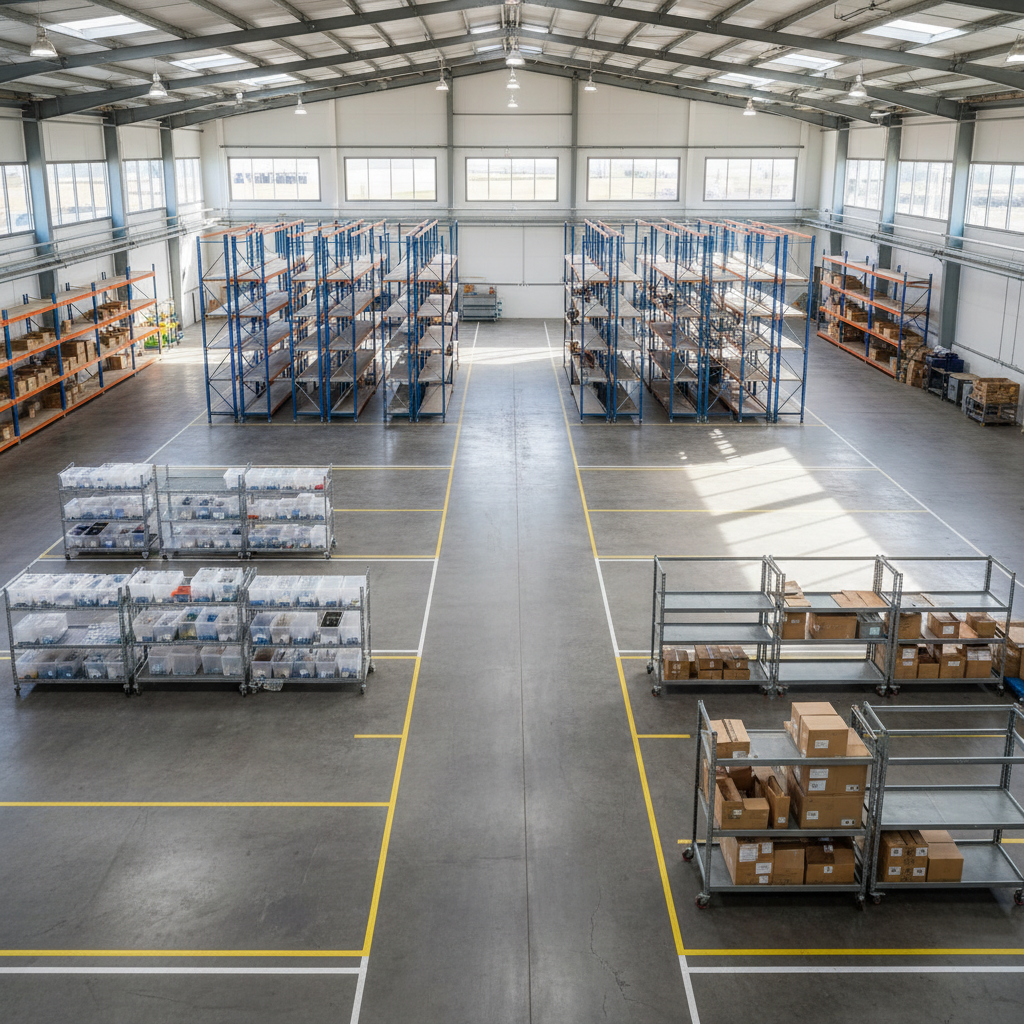
Once you have sorted your inventory, the "Set in Order" phase dictates how effectively your team moves through the space. One of the most impactful techniques for maximizing floor space is a formal ABC inventory analysis. In this model, "A" items are your high-velocity products that account for the majority of shipments. These should be slotted near the loading dock at waist height, the "strike zone," to minimize bending and travel time. Moving "B" and "C" items, which rotate less frequently, to the back of the facility or to higher rack levels ensures that prime real estate is never wasted on stagnant stock.
Many small businesses in Sanpete County struggle with space because they treat their warehouse like a retail floor, only using the first six feet of height. Utilizing vertical space through industrial racking allows for higher storage density without increasing the physical footprint. This approach is central to effective warehousing and storage solutions, as it keeps the main floor clear for equipment and foot traffic.
To maintain professional warehouse cleaning and organization, implement a clear alphanumeric labeling system. Assigning codes for the aisle, bay, and shelf level, such as B-04-03, makes it possible for a new part-time hire to locate items instantly without guided assistance. Furthermore, creating distinct zones for receiving, staging, and long-term storage prevents incoming shipments from cluttering outgoing orders. This spatial separation ensures that even during peak production times, the facility remains navigable and structured. If your current footprint feels restrictive, exploring flexible storage layout options can provide the breathing room necessary for operational scaling.
The Ultimate Warehouse Housekeeping Checklist: Daily, Weekly, and Monthly Tasks
A logical layout provides the foundation, but maintaining that structure requires a consistent cadence of upkeep. Without a formal schedule, warehouse cleaning and organization often falls to the bottom of the priority list during busy shipping periods, leading to a dangerous accumulation of debris and misplaced stock. Implementing a structured housekeeping template ensures that small tasks do not evolve into major operational disruptions.
Frequency | Core Tasks to Maintain Operational Flow |
|---|---|
Daily | Clear all packing debris and trash from workstations. Sweep high-traffic aisles and loading docks to prevent forklift tire slip. Inspect floors for liquid spills or chemical leaks. Ensure all pallet jacks are returned to designated storage zones. |
Weekly | Dust industrial racking and inventory to prevent soilage. Inspect safety signage to ensure it is visible and undamaged. Tidy and organize the packing station, restocking shipping consumables. Clear accumulated dust from floor-level racking corners. |
Monthly | Conduct a full inventory cycle count to verify stock accuracy. Inspect pallet integrity and discard splintered or cracked units. Perform a deep clean of areas behind racks and under heavy equipment. Audit aisle markings for wear and visibility. |
For businesses utilizing warehousing and storage solutions in Sanpete County, this checklist acts as a preventative maintenance plan. It protects the physical inventory from environmental damage and ensures that the facility remains safe for personnel. Consistent attention to these details prevents the hidden costs of lost time and damaged goods, allowing your operations to scale without the friction of a neglected workspace.
If your team is struggling to keep up with these requirements while managing production, you can contact Sanpete Warehouse to discuss how our managed facility can alleviate the burden of facility maintenance. Properly maintaining flexible storage layout options requires discipline, but the long-term gains in efficiency and inventory control far outweigh the daily effort.
Safety Benefits of a Clean as You Go Policy
While a structured checklist provides the schedule, a "Clean as you go" policy provides the culture. This philosophy shifts the responsibility of maintenance from a periodic chore to a continuous habit. Each team member takes ownership of their immediate workspace, addressing spills, discarding shrink wrap, and returning tools immediately after a task is completed. This practice is a cornerstone of effective warehouse cleaning and organization; it ensures that hazards are mitigated the moment they appear.
Prioritizing these habits is essential for compliance and worker safety. OSHA 3220-10N guidelines identify slips, trips, and falls as the most common warehouse injuries, often caused by neglected debris or poorly managed floors. A single stray pallet board or a discarded plastic strap can cause a worker to lose their footing or lead to a pallet jack losing traction, potentially damaging goods or causing injury. Maintaining clear, designated pathways is critical for the safe movement of both foot traffic and heavy equipment. When flexible storage layout options are strictly enforced, these routes remain unobstructed, supporting a predictable and secure work environment. Implementing these professional warehousing and storage solutions protects your inventory and, more importantly, ensures your team can operate without the constant risk of preventable accidents.
Leveraging Professional Warehousing for Better Control
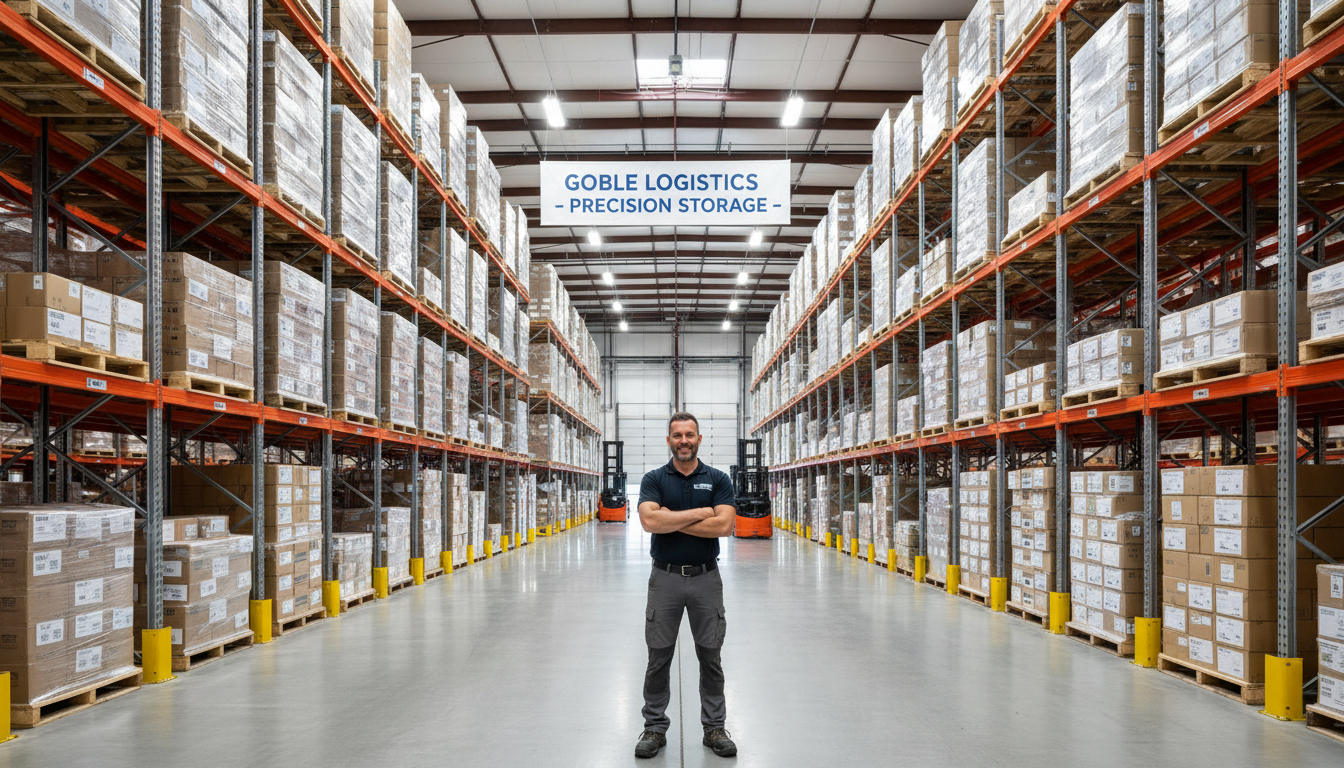
Transitioning from individual safety habits to full-scale facility management is often where small businesses in Ephraim hit a ceiling. Moving operations out of a home office or a crowded garage into a professional environment does more than just add square footage. It introduces a pre-established framework for warehouse cleaning and organization that is difficult to replicate in a residential or multi-purpose setting. Professional facilities are engineered for logistics; they feature reinforced, level concrete floors that are easy to sweep and keep clear of the oil or debris common in older, converted shops.
By choosing professional warehousing and storage solutions, business owners inherit a layout designed for high-density storage and clear traffic lanes. At Sanpete Warehouse, the environment naturally dictates order. Items are not simply placed wherever they fit; they are integrated into a system of flexible storage layout options that accommodate changing inventory volumes while maintaining strict aisle clearances. This outsourced model takes the mental load of facility maintenance off the business owner. Instead of worrying about deep cleaning schedules or pallet safety audits, you can focus entirely on product development and sales.
Documentation and ABC analysis are far easier to sustain when the physical environment supports it. A dedicated facility prevents the gradual drift back into clutter because every square foot is accounted for and managed through structured workflows. For local manufacturers ready to transition from manual, time-consuming cleaning routines to a professional standard, the next logical step is to contact Sanpete Warehouse. This shift provides the physical space and the operational discipline required to scale your business without losing control of your product.
Keeping your warehouse organized is more than just a cleaning task; it is a fundamental part of running a successful small business. By staying consistent with your routines, you can ensure a safer and more efficient environment for your team. If you find that managing these logistics is becoming a hurdle as you grow, you might consider reaching out for expert assistance. You can learn more about our approach to see how professional support could streamline your operations. We are here to help you focus on your core business goals.