Warehouse inventory tracking for small business involves organizing stock with unique labeled identifiers and utilizing methods like FIFO to ensure efficient product rotation. Small businesses can effectively manage inventory without expensive software by maintaining detailed manual spreadsheets, conducting regular cycle counts, and implementing simple barcode scanning systems for improved accuracy.
For many small business owners, the warehouse is often just a crowded room where inventory goes to hide. You know the product is there; however, finding it during a peak sales period feels like a desperate search for a needle in a haystack. This lack of visibility does more than cause stress. It drains your capital through overstocking and leads to frustrated customers when items are actually missing from the shelf. At Sanpete Warehouse, we believe you do not need a million dollar software suite to achieve retail-grade precision. This guide explores how to build a robust inventory tracking system using foundational, practical principles. You will learn how to organize your physical space for maximum efficiency, master the art of the inventory spreadsheet, and implement cycle counting to ensure accuracy without ever shutting down your operations for a full audit.
The Challenge of Inventory Control for Growing Local Businesses
Many local businesses in Ephraim start in a garage or a spare back room. When sales increase, that limited space quickly turns into a bottleneck. You reach a point where your current setup is overflowing, but you are not yet ready to commit to a five hundred dollar monthly enterprise resource planning (ERP) system. At this stage, warehouse inventory tracking for small business needs to be about clarity and attainability rather than complex digital tools.
Effective tracking is less about the software you purchase and more about the discipline of your physical workflow. It is the structured process of recording every item that enters or leaves your facility to ensure nothing is misplaced. While enterprise software carries a high monthly price tag, the cost of lost inventory in a disorganized space is often much higher. Missing stock leads to delayed shipments, frustrated customers, and redundant ordering. By focusing on organized inventory handling and establishing dependable warehousing and storage solutions, you can maintain total control without the overhead of enterprise tech. The goal is a system where the physical location of an item matches your records perfectly, every single time. Transitioning to a professional space allows you to implement these controls before the chaos of growth outpaces your ability to manage it.
Why Organized Physical Space is the Foundation of Tracking

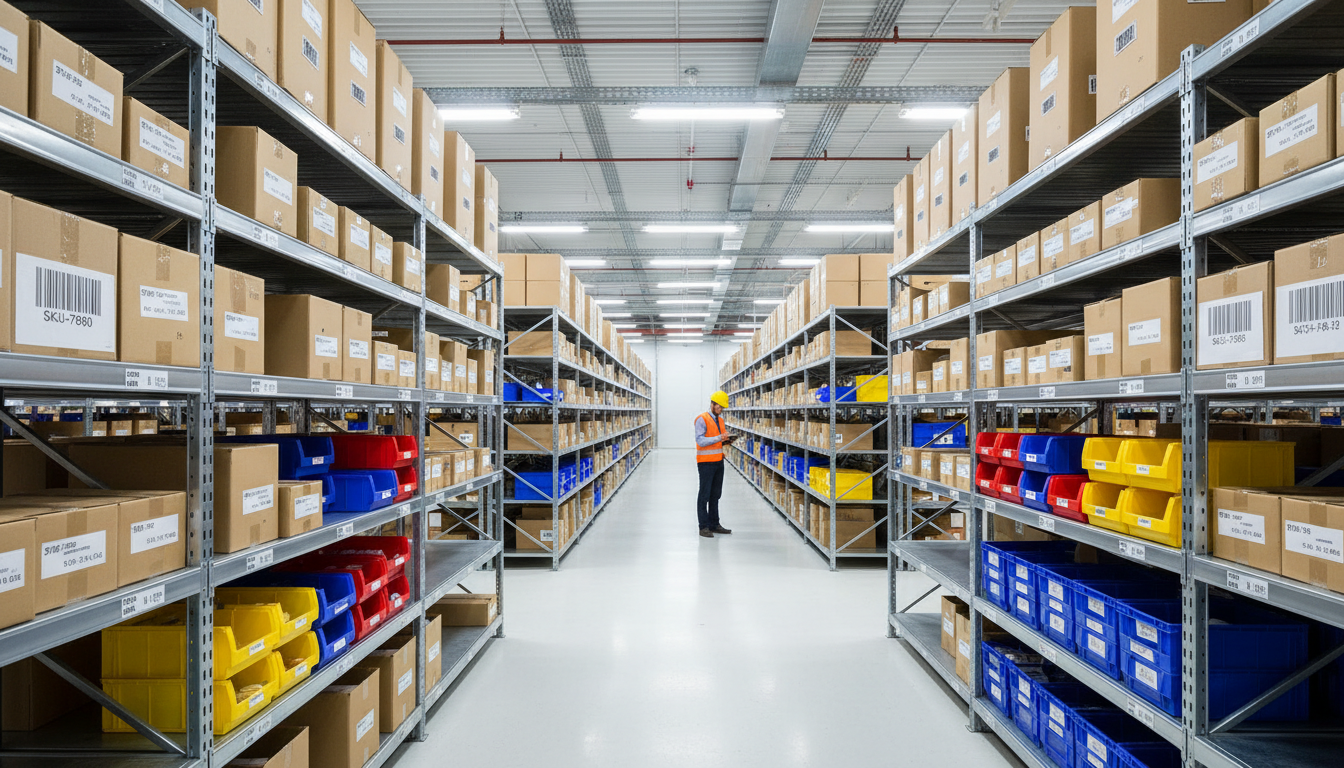
Reliable warehouse inventory tracking for small business begins on the warehouse floor, not on a computer screen. If your facility is cluttered or disorganized, even the most expensive software will fail because the digital record will never match the physical reality. The fundamental rule of inventory control is that every item needs a permanent home. When products are tucked into random corners or stacked in shifting piles, tracking becomes a guessing game.
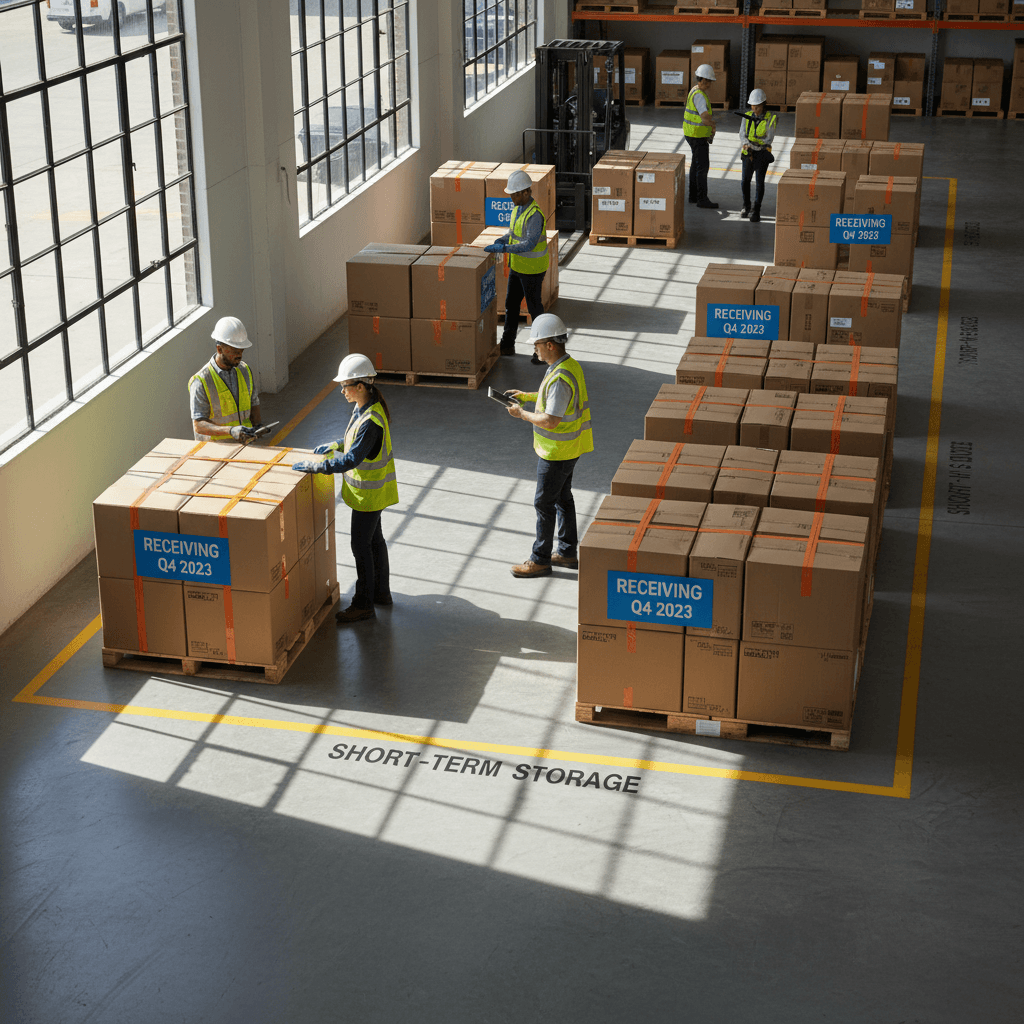
A structured layout is the only way to facilitate visual tracking. At Sanpete Warehouse, we emphasize flexible layouts that scale with your business; this ensures that as you add new SKUs, they are integrated into a logical flow rather than squeezed into available gaps. This starts with clear aisles and designated zones. You should have specific areas for receiving, high velocity picking, and long term bulk storage. By separating these functions, you prevent the cross contamination of stock where new arrivals accidentally get mixed with items ready for shipment.
Clear labeling and designated zones allow a manager to walk down an aisle and immediately identify a low stock situation without checking a spreadsheet. This visual verification acts as a fail safe for your manual records. If a bin is empty, you know exactly what is missing and where it should be. Maintaining this physical discipline reduces the time staff spends searching for products and eliminates the phantom inventory issues that plague unorganized spaces. A clean, structured environment provides the literal foundation upon which all other tracking methods are built.
The Master Spreadsheet: Building a Warehouse Inventory System in Excel

Once your physical items have a dedicated home, you must bridge the gap between the warehouse floor and your office records. For many local businesses, warehouse inventory management excel remains the most practical tool for this bridge. A master spreadsheet is not just a backup; it is a live source of truth that reflects your organized inventory handling processes. It provides a level of transparency that expensive software often obscures, allowing you to see your entire operation at a glance.
To build a robust system, your sheet needs specific columns that correspond directly to your physical workflow. A basic list of items is insufficient; you need data that facilitates action.
Column Header | Purpose |
|---|---|
SKU (Stock Keeping Unit) | A unique alphanumeric code for each product variation. |
Item Description | A clear name that matches the physical labels in your space. |
Unit of Measure | How the item is counted, such as each, box, or pallet. |
Bin Location | The specific rack or shelf coordinate where the item lives. |
Minimum Stock Level | The reorder point that triggers a new purchase order. |
Quantity on Hand | The current total number of units physically in the warehouse. |
The Bin Location column is critical. It refers directly to the structured zones established in your physical space. Without this link, the spreadsheet is just a list of assets; with it, the sheet becomes a functional map of your facility.
To make this system proactive, use conditional formatting for the Quantity on Hand column. You can set a rule where if the cell value is less than or equal to the Minimum Stock Level, the cell highlights in red. This creates an immediate visual flag for reordering, preventing stockouts without requiring a daily manual audit of every row. For a local manufacturer in Ephraim, a well maintained spreadsheet is often more accurate than poorly managed software because it is easier to update and harder to break. It keeps you in control of your data without the burden of a monthly subscription or complex training. Using these simple digital tools alongside dependable warehousing and storage solutions ensures your records remain as precise as your physical inventory.
Low Tech Methods to Track Inventory Manually
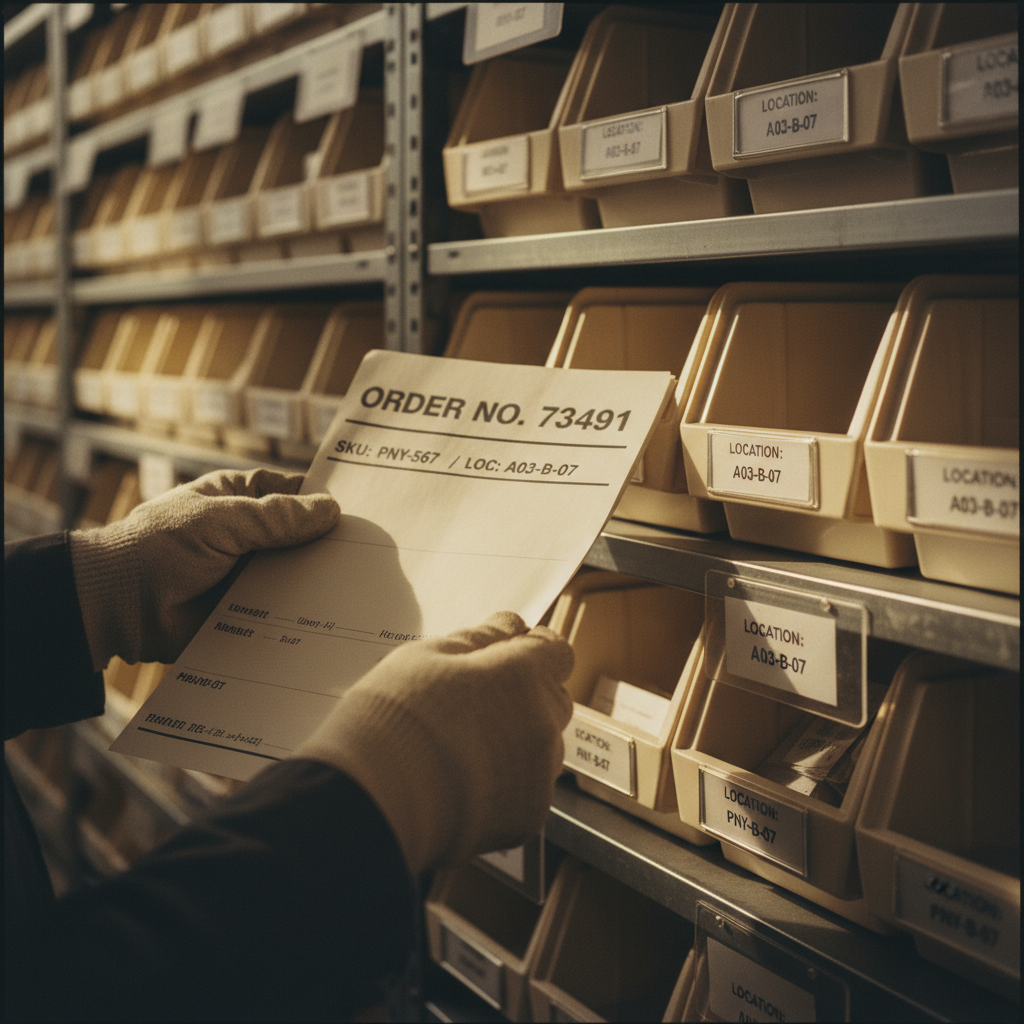
While a spreadsheet serves as your central database, maintaining accurate records requires real time updates at the shelf level. The most effective way to accomplish this without software is through the use of bin cards. A bin card is a physical ledger attached directly to the rack or shelf where an item is stored. Every time a staff member adds new stock or picks an item for an order, they immediately record the date, the quantity changed, and the new total. This creates a redundant record that can be reconciled against your master spreadsheet, ensuring that organized inventory handling remains consistent even during busy shifts.
To manage the physical movement of these items, implement the First In, First Out (FIFO) method. This is particularly vital for local manufacturers who work with materials that have shelf lives or version updates. Physically arrange your stock so that the oldest items are always at the front or top of the stack. When new shipments arrive, place them at the back of the designated zone. This discipline is easier to maintain when you have flexible layouts that scale, allowing enough room to rotate stock without overcrowding the aisles. This simple physical habit ensures that older inventory does not get buried or forgotten, which is a common cause of waste in larger storage environments.
Efficiency in warehouse inventory tracking for small business also relies on the 80/20 rule. Focus 80 percent of your tracking energy on the 20 percent of your inventory that generates the most revenue or represents your highest cost. While every item deserves a home within dependable warehousing and storage solutions, high value or fast moving items require more frequent bin card audits than low cost, slow moving consumables. By prioritizing your attention, you maintain high accuracy where it matters most for your bottom line.
Optimizing the Receiving and Picking Workflow
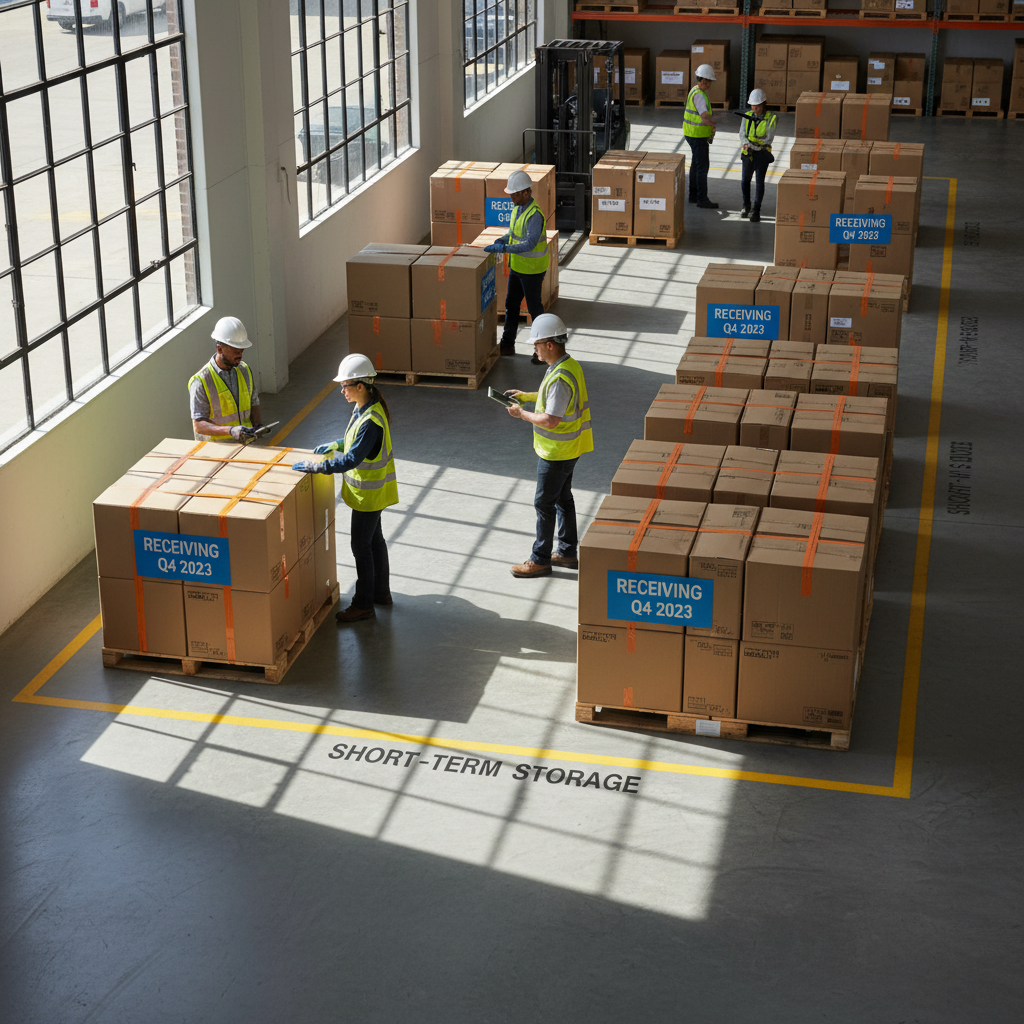
Manual records only remain accurate if your physical movement follows a predictable path. The lifecycle of an item begins at the receiving dock; for a local manufacturer, this is the most critical point for error prevention. New arrivals must be moved to a designated receiving zone, inspected for damage, and verified against the packing slip. Before the item is placed on a shelf, it should be logged into your master spreadsheet and the corresponding bin card updated. This immediate entry ensures that your warehouse inventory tracking for small business never lags behind reality.
When it is time to fulfill an order, the picking process relies entirely on the structured home you have created. A clean layout eliminates the search time that typically eats into a small team's productivity. Because Sanpete Warehouse provides flexible layouts that scale, you can adjust your aisle widths or rack configurations as your SKU count increases. This adaptability prevents the workflow from becoming cramped or chaotic as your volume grows.
Finally, establish a dedicated staging area for outgoing shipments. This physical separation between storage and shipping prevents staff from accidentally re-picking items or miscounting stock. By maintaining organized inventory handling through every touchpoint, from the initial delivery to the final outbound pallet, you create dependable warehousing and storage solutions that support growth without the need for complex automation.
Cycle Counting: The Secret to High Accuracy Without Full Audits
Maintaining a smooth workflow is only half the battle; verifying that your recorded numbers match your physical reality is the other half. Cycle counting provides a sophisticated alternative to the traditional, labor intensive annual audit. Instead of shutting down operations for a full day to count every item, businesses can implement a rotating schedule that integrates into the normal work week.
A practical schedule for warehouse inventory tracking for small business involves dedicating a specific time, such as every Friday morning, to count a single shelf or one designated zone. This method allows you to catch minor discrepancies, such as a missed entry on a bin card or a misplaced pallet, before they compound into major losses.
When a count is complete, immediately compare the physical tally against your master spreadsheet. If the numbers differ, investigate the cause, adjust the digital record, and update the physical bin card to reflect the truth. Because we prioritize organized inventory handling, this process becomes a quick verification rather than an exhaustive search mission. Utilizing flexible layouts that scale ensures that even as your inventory grows, your counting zones remain manageable. This routine discipline provides dependable warehousing and storage solutions by maintaining data integrity without disrupting your weekly production or shipping schedules.
How Sanpete Warehouse Supports Your Inventory Goals
Sanpete Warehouse provides the physical framework necessary for manual systems to succeed. In Ephraim, local manufacturers require a partner that understands regional logistics and provides dependable warehousing and storage solutions built for reliability. Our facility offers the clean, secure, and structured environment required for bin cards and cycle counting to remain accurate. By providing flexible layouts that scale, we ensure that your inventory zones remain distinct even as your product line expands.
This local focus on organized inventory handling allows you to maintain warehouse inventory tracking for small business without the overhead of enterprise software. A professional space in Sanpete County ensures that your manual tracking remains precise, actionable, and fully within your control as you grow.