
Optimizing the warehouse receiving process involves verifying inbound shipments against purchase orders, conducting thorough quality inspections, and utilizing digital scanning for accurate data entry. By establishing clear standard operating procedures and tracking metrics like dock-to-stock time, businesses can maintain inventory integrity and reduce costly errors.
A single miscounted pallet or a missed damage report at the dock can ripple through your entire supply chain, leading to stockouts and dissatisfied customers in Ephraim or Manti. For local manufacturers and distributors, the receiving process is not just a logistical chore; it is the critical point where your financial investment becomes physical inventory. If this foundation is weak, your bottom line will eventually show the cracks through mounting overhead and operational delays. This guide examines the core mechanics of a professional receiving workflow, from initial documentation to final put-away strategies. You will learn how to implement rigorous inspection checklists and transition from manual logs to scalable digital systems, ensuring your inbound operations remain a source of strength rather than a bottleneck.
Why the Warehouse Receiving Process is the Foundation of Your Supply Chain

The warehouse receiving process serves as the gatekeeper for your entire business operation. For many manufacturers in Sanpete County, the transition from a home-based garage setup to a professional facility marks a significant milestone. In a smaller space, you might rely on memory or informal notes to track stock. However, as you scale, the lack of a structured inbound workflow creates a ripple effect that touches every department.
When an error occurs at the loading dock, it rarely stays there. If a shipment is recorded with the wrong quantities or a damaged pallet is accepted without documentation, your sales team may unknowingly sell products that are not fit for shipping. This leads to customer service friction and logistical headaches for accounting when invoices do not match physical stock. These discrepancies often manifest as phantom inventory, where your records show items that do not physically exist on the shelf.
By implementing flexible storage solutions and a rigorous intake protocol, you ensure that your data is accurate from the moment goods cross the threshold. A clean, organized start prevents the compounding costs of backorders and returns. Establishing this foundation allows for better Sanpete Warehouse inventory management and gives you the control needed to focus on production rather than searching for missing boxes. If you are ready to move beyond manual tracking, you can contact our logistics team to discuss how a professional dock operation can stabilize your supply chain.
The 5 Essential Steps of a Professional Receiving Workflow
Moving from the foundational theory of supply chain management to physical operations requires a repeatable framework. A standardized warehouse receiving process transforms a chaotic dock into a productive engine, ensuring every item is accounted for before it hits your shelves. To professionalize your intake, follow these five essential steps.
1. Pre-receiving: This phase involves coordinating with carriers to schedule specific delivery windows and ensuring your team has the Purchase Order (PO) or Advanced Shipping Notice (ASN) ready for comparison. Pro-tip: Clear your loading zone at least 30 minutes before the truck is scheduled to arrive. This eliminates safety hazards and ensures your team has enough room to maneuver pallets without obstruction.
2. Unloading and Staging: Once the vehicle arrives, move the shipment to a designated landing zone. This area serves as a temporary buffer where goods are organized but not yet integrated into your main stock. Pro-tip: Use dedicated floor markings or [flexible storage solutions](/services) to separate incoming goods from your outbound shipments, preventing accidental cross-contamination of orders.
3. Inspection: This is the most critical manual step. Your staff must verify that the physical shipment matches the documentation, checking for damaged packaging, verifying SKU counts, and confirming the integrity of shipping seals. Pro-tip: Always match the bill of lading against the original PO immediately; if the numbers do not align, document the discrepancy and have the driver sign off on the variance before they leave the facility.
4. Data Entry and Labeling: Log the received goods into your tracking system. Assigning a unique tag or barcode to each pallet or carton is essential for long-term visibility. Pro-tip: Standardizing these steps helps maintain rigorous [Sanpete Warehouse inventory management](/about) even during seasonal peaks, as every item is searchable the moment it enters the system.
5. Putaway: The final step involves moving items from the staging area to their permanent storage locations. Pro-tip: Focus on your dock-to-stock time. Aim to clear your staging area within the same business day to keep the workflow moving and prevent bottlenecks that stall production.
Detailed Inventory Inspection: A Warehouse Receiving Checklist
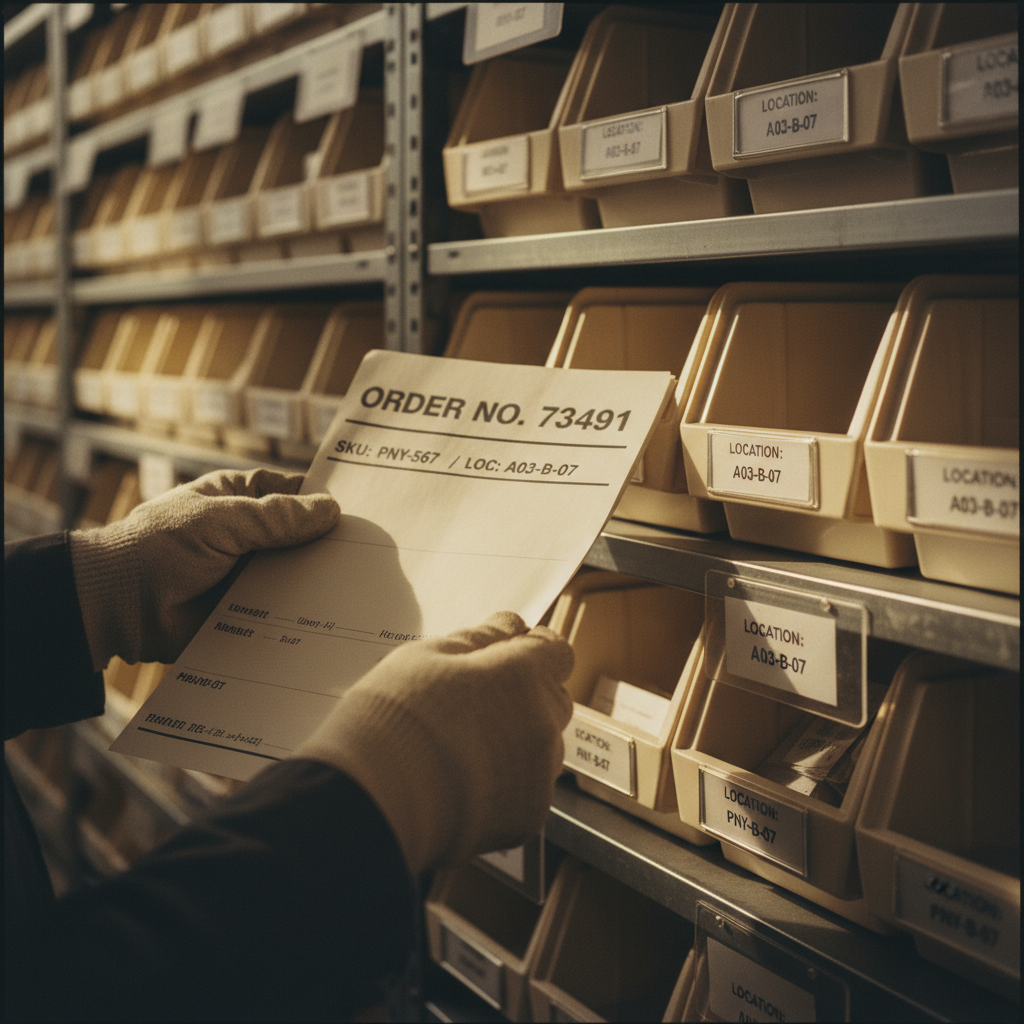
While the workflow provides the structure, the inspection checklist acts as the critical filter catching errors before they settle into your racks. A thorough inspection protects your bottom line by ensuring you only accept sellable merchandise. If you discover issues later, your leverage for a freight claim drops significantly once the driver leaves the premises.
Use the following criteria to evaluate every inbound shipment:
Checkpoint | Action Item |
|---|---|
Container Integrity | Scan for water stains, oil leaks, or crushed corners on cartons. |
Security Seals | Verify that trailer seals or pallet wraps are intact and match documentation. |
BOL Reconciliation | Count individual units or pallets against the Bill of Lading (BOL). |
SKU Validation | Match item numbers on packaging to your Purchase Order (PO). |
Hidden Damage | Inspect for internal breakage where the outer shell appears intact. |
Looking for hidden damage is vital for manufacturers handling fragile components or electronics. A box may arrive without a scratch, but high impact drops during transit can shift internal contents or break fragile joints. If you hear rattling or see signs of compression, open the container immediately to verify the product's condition.
Documentation is your only defense in a dispute. If you identify any damage, take clear, high resolution photos of the packaging, the product, and the BOL simultaneously. These photos serve as objective evidence for insurance or freight claims. Recording these details as part of your Sanpete Warehouse inventory management ensures you have a paper trail that supports your financial recovery.
By utilizing flexible storage solutions that provide enough space for a proper inspection area, you avoid the rush that leads to missed details. If your current receiving area is too cramped to perform these checks safely, contact our logistics team to see how our layout can accommodate your quality control needs.
Common Receiving Challenges for Ephraim and Manti Area Manufacturers
Small manufacturers in Sanpete County face logistical hurdles that differ significantly from those on the Wasatch Front. One primary issue is the inconsistency of freight carrier schedules in rural Utah. Because Ephraim and Manti often sit at the end of long delivery routes, carriers may provide irregular delivery windows or arrive with little notice. This unpredictability makes it difficult to coordinate labor for the warehouse receiving process without disrupting active production cycles.
Beyond timing, many local facilities struggle with a lack of specialized equipment, such as heavy duty forklifts capable of handling industrial grade pallets. When a shipment arrives that exceeds the capacity of a standard pallet jack, operations grind to a halt. These physical limitations often lead to dock congestion, where incoming materials sit in the path of outgoing shipments. This creates a cluttered environment that complicates Sanpete Warehouse inventory management and increases the risk of workplace accidents. If your current dock space is consistently overwhelmed by incoming stock, utilizing flexible storage solutions can provide the necessary buffer to keep your shipping lanes clear and your production moving forward.
From Clipboards to Barcodes: Scaling Your Documentation
Scaling your documentation means moving from reactive recording to proactive tracking. Many local startups begin with a manual, paper-based warehouse receiving checklist template to verify incoming shipments. While a clipboard and pen are sufficient for 50 items, this system inevitably fails when your volume grows to 5,000 units. Manual entry introduces human error through illegible handwriting and delayed data synchronization, creating significant gaps in your records.
When determining how to receive stock effectively at scale, digital scanning is the most reliable upgrade. Transitioning to barcodes allows your team to capture data instantly, reducing the time spent on manual input and verification. We recommend standardizing your labeling early by assigning a unique License Plate Number (LPN) to every pallet the moment it enters the dock. This tracking tag acts as a digital fingerprint, linking the physical goods to your digital records throughout the entire Sanpete Warehouse inventory management cycle.
By utilizing flexible storage solutions that accommodate technological growth, you ensure that your documentation keeps pace with your production. If your current manual methods are leading to inventory discrepancies, you can contact our logistics team to learn how professional scanning protocols can eliminate data lag and provide real time visibility for your stock. This shift from paper to digital not only improves accuracy but also prepares your business for the increased speed of modern supply chains.
How Professional Warehousing Solutions Streamline Your Inbound Operations

Transitioning to digital systems is a significant leap, yet the physical labor of managing the warehouse receiving process remains a bottleneck for many growing businesses. Sanpete Warehouse serves as a strategic partner in Ephraim, handling the demanding tasks of unloading, inspecting, and logging stock so you can remain focused on your core operations. Our facility provides climate controlled staging areas, ensuring that temperature sensitive materials or fragile components are protected from the elements the moment they leave the truck.
By utilizing our structured workflows, you avoid the clutter and safety hazards that come with seasonal inventory surges. Our flexible storage solutions are designed to scale, allowing you to expand your footprint during peak times without committing to a permanent, oversized lease. We integrate professional Sanpete Warehouse inventory management practices into every intake, providing you with the accurate data needed to drive informed purchasing decisions. If your current workspace is overwhelmed by incoming shipments, contact our logistics team to learn how our specialized facility can streamline your inbound logistics and secure your supply chain.
Optimizing your receiving process is essential for maintaining inventory accuracy and ensuring long term growth for your Utah business. By focusing on detailed documentation and organized workflows, you can minimize costly errors. If you find that managing these logistics is taking too much time away from your core operations, you might want expert help. We invite you to learn more about us to see how we provide professional support and tailored warehousing solutions that help local companies thrive in a competitive market.